
After the call, I went into full survival mode. I calmly closed my drawer, texted my manager to find someone to cover my shift for the next couple days, and left for the emergency room. A family friend was able to meet me so that I could go home first, pack an overnight bag, and not be alone in the ER while my mom raced to meet me. The friend is a doctor so she was able to walk me through what was about to happen. I appeared to be totally fine. No one could tell I was in distress by looking at me, so she suggested that they might just put me on oxygen overnight to see if it fixed itself, which is often what they do for children with slight collapses. After an additional x-ray and several doctors input, it was decided that I needed a chest tube.

They gave me medicine to make me sleep, and inserted a tube about the width of a pencil in between my ribs under my arm. The tube creates suction to empty the chest cavity of any air or fluid and pull the lung up into the correct position. When I woke up, I quickly realized that the treatment was going to be much more painful than the problem. Talking, breathing, and moving induced nerve spasms that were extremely painful.
I only had to stay for the weekend, before they were able to remove the tube and let me go home. The tube removal was more painful than the placement because they remove the tube and stitch it closed in one movement so that the lung does not collapse again. The morning of my follow up appointment, a week later, I was sitting on the couch and sat up straight to stretch my back. That’s when I felt the pinch again.
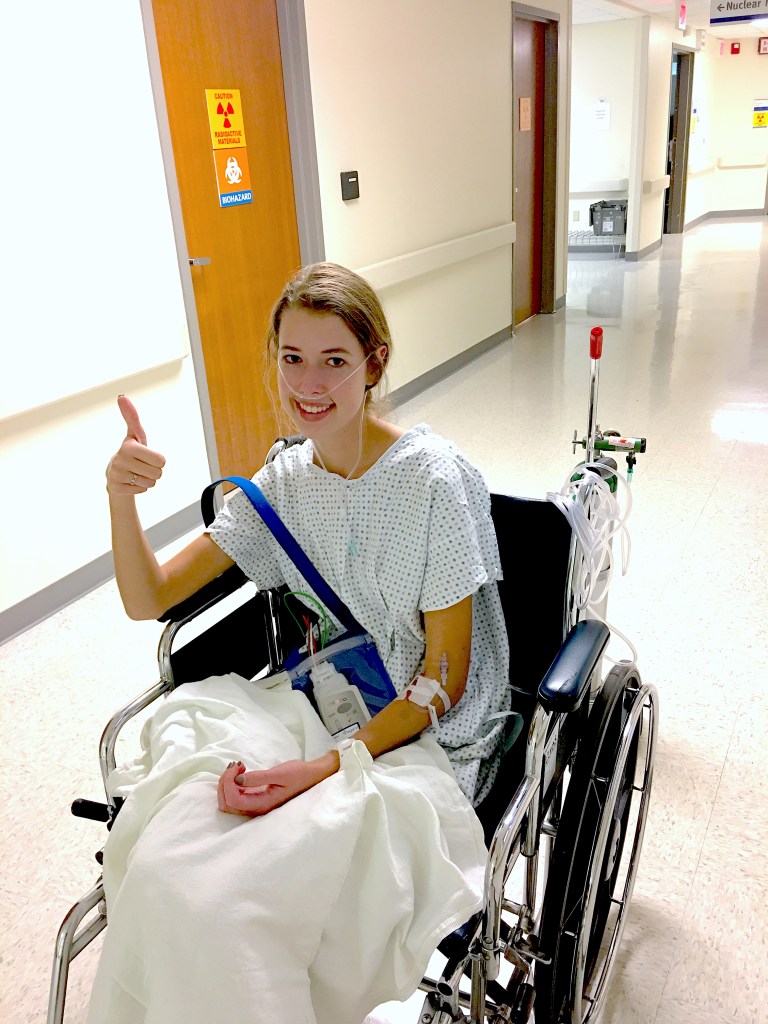
I showed up to my follow-up appointment scared to death that I was going to have to go back to the hospital. They removed the stitches and took another x-ray. It appeared that I was healing well. They sent the images to a radiologist for review but said I was good to go home! Six hours later I got the call. The radiologist spotted another lung collapse and I needed to go straight to the hospital. It became clear that spontaneous lung collapses would be a frequent problem for me, and my best treatment option was a surgery that would seal my lung to my chest wall by creating scar tissue.
The surgery was a success! There were no signs of damage that would have caused the spontaneous collapses, so all I needed was a week with a chest tube and monitoring in the hospital and I would be on my way to recovery.
I learned a lot from my time in the hospital. Most importantly I learned that every person is an expert on their own body and experience. I was the one feeling the collapse, and I knew that it was not normal for me. From the doctors’ and nurses’ views, there could be a variety of reasons for those symptoms that are very normal and common. The doctors have to rule out the common causes first which is why you have to be able to advocate for yourself and ask that they address the symptoms that are less common. Lastly, I continue to learn through this experience that it is ok to have a false alarm occasionally when the alternative is potentially leaving life threatening conditions untreated.


 Beyond This
Leave a comment